Hay view from Castle

Hay view from Castle
Hay-on-Wye, Powys (formerly Breconshire), Wales. The "Town of Books" (and Vaughans!)
Showing posts with label Elinor Vaughan. Show all posts

Sunday, September 26, 2021

Our Elinor and Mary Taylor Mayo

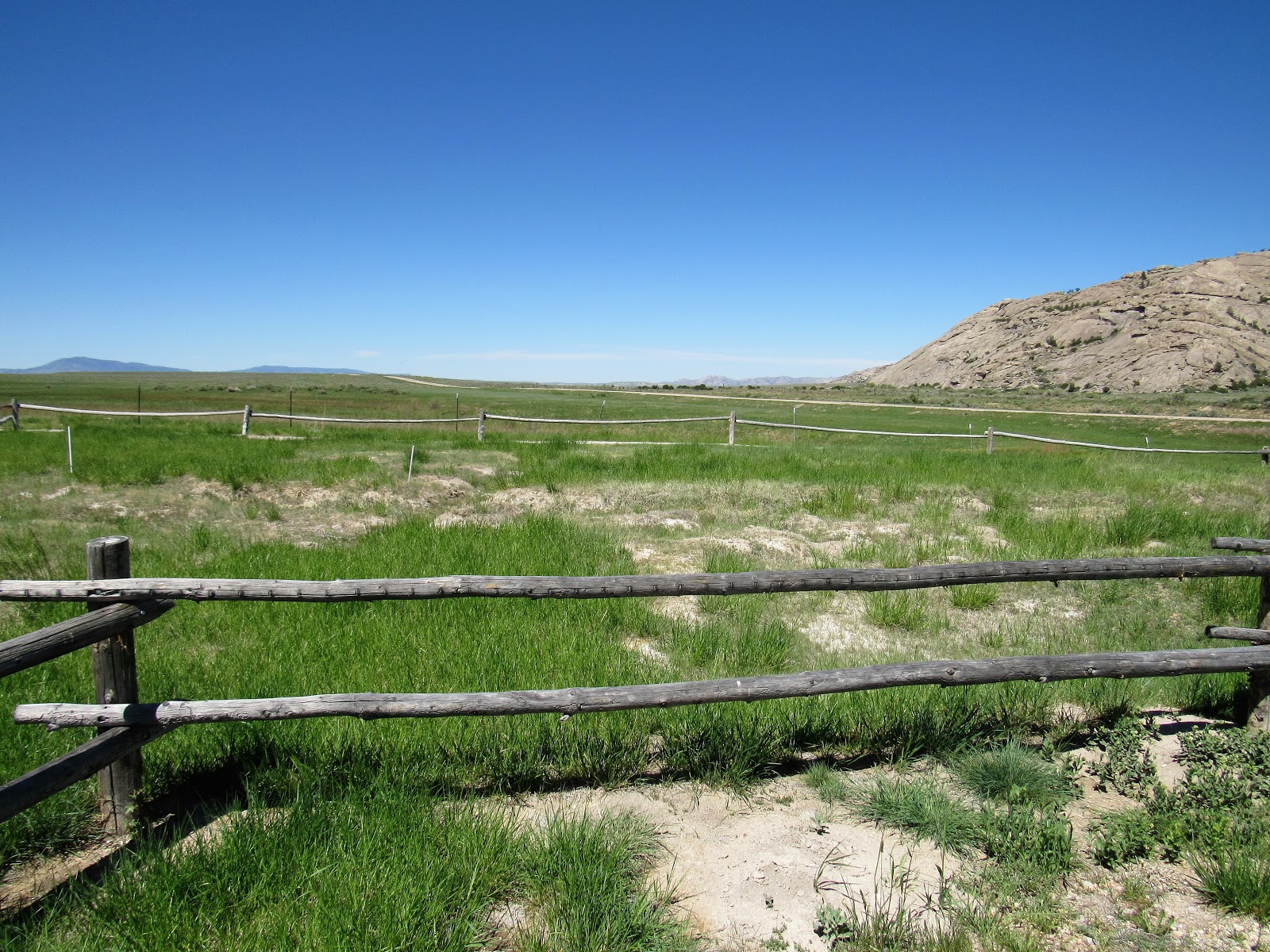
The evidence is pretty solid that our Elinor* (1789-1861) was the traveling companion of Mary Taylor Mayo (1791-1856) in their travels to America and on the Pioneer Trail. Mary is the one who died just short of South Pass on the Overland Trail. She died September 13, 1856, in Nebraska Territory and was buried in Oregon Territory when the Ellsworth Handcart Company stopped for the night at Pacific Springs.

There are two contemporaneous lists of the members of Ellsworth's Company that departed Iowa City on June 2, 1856. Neither one is in alphabetical order. The people are generally grouped by families. Interestingly, Elinor is not grouped with her daughter, Jane Vaughan Lewis (1827-1890) and her family. They travelled from Britain to the United States in different ships within weeks of each other. However, Elinor and Mary Mayo are listed together on both lists.

CHL MS 1964 Ellsworth Folder 1, Journal list, Image 11,  p. 6, Eleanor Vaughan, Mary Mayo.

CHL MS 1964 Ellsworth Folder 2, Image 6, Co. List, Eleanor Vaughan No. 35.

CHL MS 1964 Ellsworth Folder 2, Image 7, Co. List, Mary Mayo No. 36.

The first thing to notice is that Elinor's age is given as 68 on these lists. This is much more accurate than most other records of the time. She is listed on the Enoch Train ship manifest as 78, and as various other ages in the records. 

As a service missionary in the LDS Church History Library (CHL), I have had the opportunity to discuss Elinor and Mary Mayo with the professional historian who is in charge of the Pioneer Database. In a recent conversation, she confirmed that seeing Elinor and Mary together on these lists was a good indication that they had been assigned as traveling companions, most likely when they both boarded the Enoch Train, as neither of then had any family to be with them on that stage of the journey. Their natural inclinations as elderly widows would be to look out after each other and that would have suited the Mormon Elders in charge of the passengers.

This likely continued on the trail. While "family" may be an important unit and would have usually slept together in the same tent, the handcart companies were often divided based on needs of the group as a whole. The youngest children able to walk were led out together in the morning before the families packed up. Mothers would be expected to carry infants. Young men were often assigned as teamsters, to drive stock, to assist the elderly and infirm, or other duties. Generally, each handcart was for five individual and each canvas tent slept twenty. In the second list above, the company appears to be counted by tens and twenties that may have reflected the "captaincies" and the tent assignments.

Another matter that I have yet failed to discuss with professional historians is that Mary Ann Jones (1836-1925) who later married Edmund Ellsworth, told of two elderly women who were not happy with the weight limit for their personal goods on the handcarts. One, who has been identified as Mary Mayo, carried a hatbox in her hands. The other, whom we believe to be our Elinor, had a teapot and colander tied to her apron strings. It makes perfect sense that these two traveling companions would have devised similar strategies. No one apparently challenged the two determined matriarchs.

The Enoch Train left England on March 23. Mary Mayo died September 13. That is six months that these two women likely spent in each others company day and night, in sickness and travail. When Mary died of dysentery, Elinor was most likely with her. The sick wagon, driven as a sweep behind the company to pick up any dead or ill of the company left aside the trail, would have come upon Mary and perhaps Elinor as well. Elinor would have walked with the body as they carried it to the grave on the side of Pacific Butte. She may have carried Mary's hatbox and placed it with her.

Twin Mounds on Overland Trail just east of South Pass.


Pacific Butte from Trail Marker at Pacific Springs - Burial Place of Mary Mayo

__________________________
*In most records, she is identified as "Eleanor." Her name at Christening in Whitney, Herefordshire, used the Welsh spelling of "Elinor."

Sunday, January 20, 2019

Abednego Rising

My order of the great historical losses in the word:
1) the Library of Alexandria;
2) the Library at Raglan Castle, Wales;
3) the 1890 US Census, and;
4) the 1831 Merthyr Tydfil Petition of 11,000 signatures to save the life of Dic Penderyn.

Some of those 11,000 on the petition to Lord Melbourne may have joined the Church of Jesus Christ of Latter-day Saints in the 1840s. We think we know one of them.

There's some irony that during the longest federal shutdown, being locked out of work, I've read The Merthyr Rising, by Gwyn A. Williams (University of Wales, Cardiff 1978). The Rising came about because of the Ironmasters conspiring to lower wages and shut-down work making it very difficult for the families of working poor in the ironworks, the coal, ironstone, and limestone mines, and processing mills to feed their families.

"Bara gyda caws!" was the shout of the crowd for "bread and cheese" in front of the Castle Inn when the 93rd Highland Regiment fired on the crowd killing two dozen and wounding dozens more. It only gave the leaders of the town and small contingent of soldiers an opportunity to escape to Penydarren House, which was more easily defended.

The workers held the town for a few days in June 1831. They even held off the Highlanders' relief troops from Brecon at the steep slopes of Cefn Coed just north of Merthyr Tydfil. However, within a few days, the gentry militias and soldiers of the King converged on the town and the workers went back to the mines and furnaces. The British Parliament and the ironmasters were smart enough to establish some reform.

We found a newspaper article from 1833 that Elinor Jenkins Vaughan's son-in-law, Abednego Jones (1811-1890), appears to have participated in the Rising. The book confirmed my source. Here's how Professor Williams lays it out in his Preface about the stories he heard growing up in Merthyr:
It was astounding to me, or to be more accurate, it became astounding tome in retrospect, how often the talk curled back to 1831. One story lodged in my mind like a limpet intruder. They would shriek with laughter as they told of a young boy, Abednego Jones, who went about Merthyr during the Rising carrying a huge white banner as big as himself (by the end of the evening, it would be twice as big) and piping in a shrill, choir-boy treble: 'Death to kings and tyrants! The reign of justice for ever!'
     I did in the end find one 'huge white banner': it was carried by workers on the  march to the Waun Fair which started the rebellion. The young boy I never found. But once, quite by accident, I came across a court case in the Merthyr Guardian for 1833. A miner sued two others for cheating him out of his stall, won, and was then exposed as a man who had 'carried a banner during the Merthyr Riots'. This phrase recurs constantly in obituary and other notices; it evidently marked a man out. The judge read the offender an appropriate sermon. His name was Abednego Jones. [footnote to the same article that I found.] In 1833, he was no boy. Perhaps he was short. The Merthyr Rising, at 14.

Saturday, December 29, 2018

Grandma Elinor's Departure from Waterloo Dock on the Enoch Train, 1856

The bad news is that the Waterloo Dock in Liverpool was significantly modified in 1868 and is now blocked off by apartments and offices. But we know where it was at the lower end of Waterloo Road just north of Prince's Dock.

The good news is that I found an 1850 article from the Illustrated London News about emigration from Waterloo Docks. Grandma Elinor embarked on the Enoch Train from Waterloo Dock in 1856 for Zion. It couldn't have changed that much in six years.

The article is mostly about Irish emigration because of the potato famines and general conditions of abject poverty. There are important confirmations in the article that ships sailing to and from the United States used Waterloo Docks and that steerage passengers were boarded 24 hours ahead of sailing to be organized below decks and likely to clear space before the saloon (first-class) passengers boarded.

Sunday, December 9, 2018

Christmas Eve Services, Llanfoist, 1841

It isn't much, but another missionary journal from Elinor's era in Llanfoist tells us:

“My next appointment was at Llanfoist where I found a steady and attentive congregation. This is a dark and sootey place owing to the vast amount of coal and iron works here.” 

James Palmer Reminiscences, circa 1884-1898 LDS CHL MS 1752_f0001_00071. 

This source must be based on a contemporaneous journal as there are dates that would not be remembered unless recorded somehow. James Palmer occasionally traveled with Elder John Needham who baptized Elinor Jenkins Vaughan on 17 December 1841, just one week before the Christmas Eve meeting in Llanfoist. Elder Palmer also visited the Branch at Llanthony in the Black Mountains and was the first missionary to preach in Abersychan in June 1841, apparently without much success.

Elder Palmer is credited with the first recorded baptism in South Wales. His Reminiscences records that on either the 23rd or 30th of November, 1840, he baptized John Preece and William Williams in the River Monnow at Skenfrith, Monmouthshire. It just so happens that I took pics there on my visit last Good Friday, not knowing about this history (even though it's recorded in Truth Will Prevail: the Rise of the Church of Jesus Christ of Latter-day Saints in the British Isles 1837-1987 (University Press, Cambridge, UK 1987), p. 240, as well as the Reminiscences at p. 13.)

The River Monnow at Skenfrith, Monmouthshire, Wales. First baptisms in South Wales near here.

Friday, June 1, 2018

An Apostle's Family Forged in Welsh Iron

Albert Ernest Bowen (1875-1953). LDS Apostle 1937.
Albert E. Bowen is not one of the big names in LDS Church leadership. He was a serious-minded, hard-working man. He appears to be best remembered and quoted in LDS General Conference for his teachings on Self-Reliance and the Church Welfare Program. He wrote a booklet entitled "Constancy Amid Change" that was updated in the 1980s as well as authoring a Sunday School course of study, "The Church Welfare Plan."

One of the more recent General Conference quotes attributed to Elder Bowen was in an address by Elder J. Thomas Fyans in 1982:
The only way the Church can stand independent is for its members to stand independent, for the Church IS its members. It is not possible to conceive of an independent Church made up of dependent members—members who are under the inescapable obligation of dependency. The Lord must want and intend that His people shall be free of constraint whether enforceable or only arising out of the bindings of conscience. It is not believed that any person or people can live from gratuities—rely upon them for means of subsistence and remain wholly free in thought, motive and action. History seems to record no such instance. That is why the Church is concerned that its members, who have physical and mental capacity to do so, shall render service commensurate with their capacities for aid extended. That is why the Church is not satisfied with any system which leaves able people permanently dependent, and insists, on the contrary, that the true function and office of giving is to help people into a position where they can help themselves and thus be free.
Elder Bowen knew a lot about self-reliance. Born on a farm near Samaria, Idaho, he worked hard in his youth. He spent a harsh winter with a brother homesteading a parcel of land in Star Valley, Wyoming. His mother, Annie Shackelton Bowen (1840-1929) shared her love of books and learning and Albert did well in school, served a mission in Switzerland and Germany, and studied law at the University of Chicago. He excelled in the practice of law and business in Cache Valley and Salt Lake City, Utah. He was called to be an Apostle by President Heber J. Grant in 1937.

What interests me is that his father was David Bowen (1837-1910), born in Blaenavon, Monmouthshire, Wales. He traveled to Utah in the Ellsworth Handcart Company in 1856 along with my 4th Great Grandmother, Eleanor Jenkins Vaughan (1789-1861). The Bowens and Vaughans must have known each other.

Sunday, May 27, 2018

Traveling the Seminoe Cutoff on the Overland Trail to South Pass

The Wyoming State Historical Preservation Office (WSHPO, pronounced "Wyoming Shipo") and historians with the LDS Church interpreting the Devil's Gate/Martin's Cove area on the Overland Trail in Wyoming, have established that it was Charles (1812-1865), not his brother Basil LeJeunesse (1814-1846), who was known as "Seminoe" and established the fort at Devil's Gate.

These brothers were amazing as most Mountain Men were. They all knew each other; Basil traveling with Kit Carson and John C. Fremont's mapping expeditions. Basil was killed by Modocs at Klamath Lake. Charles abandoned his post at Devil's Gate in 1855 due to troubles with the Cheyennes. Cheyennes killed Charles in 1865 at Clark's Fork, Yellowstone. His half-Shoshone sons took their vengence by killing Cheyenne Chief, High Backed Wolf.

Generally aware of the Handcart stories, I knew there was a ramshackle trading post at Devil's Gate that served as a shelter in the miserable winter of 1856-57 for those guarding the freight emptied from the wagons to carry some of the handcart pioneers of the Willie and Martin companies to Salt Lake City. In the past couple of years, I also became aware that the earlier and more successful handcart companies of that year took the Seminoe Cutoff. It was only two weeks ago that I managed to put the two together to understand it was this "Seminoe" guy who explored the cutoff that saved some trouble for my handcart ancestors and had established the fort/trading post at Devil's Gate.

A portion of the archeological site with the reconstructed fort right next to it. And Devil's Gate behind.
Looking up the Sweetwater Valley from the original site of Seminoe's Fort. Martin's Cove is to the right.
Split Rock can be seen in the far distance.

Thursday, May 10, 2018

Likely Vaughan House in Cusop

Forget the Thirty Acres!

Church Cottage, across the road and Cusop Green from St. Mary's Church, Cusop, Herefordshire
The Google view from the other direction. St. Mary's Church is on the right. The church car park is right behind this view.

Sunday, April 1, 2018

Cymru 2018, April 1 EASTER Edition


We're skipping a bit and I'll catch up. It's just that Easter is worth something on its own and out of sequence.

The sky was blue and bright this morning. Then the sun came over the Black Mountains (Y Mynyddeodd Duon). It was time to get up there. Originally, I had planned to go up on the Equinox and mark the shadow of our little standing stone. I was wise about the weather that day and stayed on lower ground. This bright morning, the shadow is still pretty close to due West, but then every shadow is, of course, with the sunrise. The question is, did our Neolithic ancestors know and mark that? You will see there is a rock on which the shadow falls. It is likely the standing stone was set straighter a few thousand years ago and most of the stones of the circle are missing, so who knows?

Still, the mountains were glorious!

Penybegwm (Pen-y-Beacon or Hay Bluff) on the left, Twmpa (Lord Hereford's Knob) on the right.

Friday, March 30, 2018

Hannah Vaughan lived in Cusop!

St. Mary's, Cusop, Herefordshire, with daffodils and yews.
The new Hereford Archives and Records Center (HARC) is an excellent facility! In ease of use and space, it surpasses the LDS Church History Library. And . . . they let you handle original documents! It was busy yesterday morning with a dozen or so patrons. And everything ran like clockwork in the new, suburban setting with large windows looking out into the woods.

Every archive has its own rules and style. HARC was much more efficient than any I have used to date. I have to say, though, that Powys's new facility is also very good, its staff most friendly and helpful, but it is much smaller. And Gwent Archives in Ebbw Vale still has my heart because the service there was the most personal and friendly. But that's the Valleys, it is.

The National Library in Aberystwyth is also very good and very professional. They also gave me some personalized assistance in the one task I was after. I now need to go back which I will do in August. But it is an intimidatingly formal place with its huge, stately appearance up on the hill with the fantastic view looking out over the town to the Sea.

They are all wonderful archives, even CHL. And I appreciate them all. But it was at HARC yesterday that I found Hannah again. And the Holy Yew continues to call.

Sunday, March 18, 2018

Trip to Wales, March 2018 III, Blorenge Rhymes with Snow Range

 Cold is colder in a humid climate. Oh, yeah. And the wind helps cool it down. And an old house heated by radiators too.

It only got just below freezing and there wasn't much snow except for wet little clumps. The mountains were pure and white.

The Blorenge from Abergavenny, out my back garden.
The excitement of visiting Grandma Elinor's likely baptism site on the Brecon & Monmouthshire Canal motivated me to go out in the cold. I wore my wool socks over some Nike comfort socks.

Thursday, July 27, 2017

South Pass

Looking West from South Pass. Pacific Butte on the left.

"Top of the World," some say even if it is not a peak and hardly a pass in the traditional sense of crossing mountains. One does have a sense of a spherical earth dropping down in nearly every direction (Wind River Range on the north excluded).

My grandson and I had a wonderful trip exploring portions of the Overland Trail in Wyoming in commemoration of the day after Pioneer Day and my wife's birthday, as she is out of town. The OT refers to four recognized trails that crossed here although Native Peoples have crossed here for millennia. The trails are: Oregon, California, Mormon Pioneer, and the Pony Express. We could also add in the Astorians in 1812, Mountain Men, the Whitman-Spaulding Missionaries of 1836, some commercial stage lines, the overland telegraph, and many visitors, but only us two last Tuesday.

As one of our purposes was family history, I will illustrate a few sites with reference to the Ellsworth Handcart Company of 1856 with my direct-line ancestor, Elinor Jenkins Vaughan, her daughter Jane Vaughan Lewis, Jane's husband John Lewis, and their son, John Samuel Lewis. They crossed South Pass on September 13, the 96th day out from Iowa City. They camped three miles down this road at Pacific Springs which can't be seen but is at the base of Pacific Butte on the left, just before the small ridge, just left of center. My Grandson and I walked down and back to get a feel for the trail. It was a good walk and a better talk.

At one point, I explained that while pioneer children may have sung as they walked and walked, they were probably not always happy. I told him that he was big enough he would likely have helped with the family handcart, but the younger children above toddler age would get up, have a breakfast of biscuits and tea (long before Pres. Grant started enforcing the Word of Wisdom) and head out on the road in a group led by adults while the others packed up the camp. Eventually, the handcarts would pass the children. Then, the two or three wagons with the company would pass as the oxen were slower than people with handcarts. Hopefully, the new camp would be ready when the children came in. We imagined that mothers might have gone back up the trail to meet their children if they weren't needed for cooking or setting up their camp. I also explained that the children were sometimes guided by the adults with long sticks, like a gaggle of geese. And they were poked or prodded (or worse) if they lagged.

Saturday, July 15, 2017

It's Not a Quest If You Find It


If the only things that happened were that I had a great road trip with two of my boys and a chance to show them Jacks Valley, Nevada while telling them stories of our ancestors and how we found them, then we can't be the least bit disappointed that we found no actual grave site.

We made good time and followed the paved routes closest to the original California Trail, Humboldt Route (I-80) crossing the forty-mile desert (US-95) from the Humboldt Sinks (Lovelock) to the Carson Sinks (Fallon). Then it was US-50 on the Pony Express route right into Carson City and then South, turning up the official route onto Jacks Valley Road

Sunday, October 30, 2016

Monday, October 24, 2016

I Don't Believe Elinor Is in the Jacks Valley, Winters Family Cemetery

My wife graciously agreed to take an extra day home from Disneyland and by the long way so that I could visit Jacks Valley, Nevada, again. I tried a number for the Ascuaga Cattle Co. but they said it was the casino that had been sold by Mr. Ascuaga. I started calling US Forest Service offices to see if they had a contact at the Ascuaga Ranch. They passed me to several numbers where I left messages but got nowhere. I called the Curator at the Douglas County Historical Society with whom I had previously corresponded. She suggested that I just try going up to the ranch and explain myself politely to ask for access to the old cemetery.

It worked. The Ranch Manager came out and after I rattled off apologies and numerous names and dates belonging to my family and the history of Jacks Valley, he gave me Mr. Ascuaga's phone number and said that on his authority, we could go up to the old Winters Family cemetery. He said Mr. Ascuaga would be happy to allow us and to talk with me.

We went down the road and parked as directed, then walked up the hill on the wrong side of the fence. Finding a gate, I slipped through then pulled the gate post hard until I could slip the wire loop back over after my wife got through.

It was as beautiful as imagined. In the early evening the light was soft and the view was clear down over Jacks Valley to the larger Carson Valley. Snow was on the highest peaks of the Sierra.

In the Cemetery, by gracious permission of the Ascuaga Ranch
It is a relatively unknown, Mormon pioneer cemetery, or of pioneers who were Mormons as they seem to have left the Church or the Church left them when the call came in 1857 to return to the other side of the Great Basin facing a threat from the U.S. Army. These did not go.

Friday, October 7, 2016

Jacks Valley, Nevada: Yesterday, Today, and Forever


On a typical less-than-busy evening at the North Bountiful Family History Library, I was working on my own family interests and came across a great picture of Jacks Valley, Nevada, from 1939:

Jack's Valley Pony Express Station
With the gracious permission of Sherratt Library Special Collections, Southern Utah University, Cedar City, Utah, which owns the rights.

The photo caused one of those little mental shocks as should be obvious from this photo I took a couple of years ago at almost exactly the same spot:

North end of Jacks Valley, Nevada, looking Northeast from Jacks Valley Rd.. 20 October 2014
In the background against the hills is the Ascagua Ranch, originally established by the Winters Family.
Yeah, pretty weird, right?

Monday, November 16, 2015

Crossing the Carson River, 1859

The National Archives come through again!

I just discovered this wonderful pic in the public domain of Capt. Simpson's crossing of the Carson on his successful exploration of a new route across Nevada (that was almost immediately put to use by the Pony Express!) This is just on the northeast edge of what is now Carson City heading up river towards Genoa, then still Utah Territory. Elinor, Jane Vaughan, John and John S. Lewis would have known this site and perhaps crossed here.

John J. Young, Artist, from contemporaneous sketch by von Beckh (June 10, 1859)  (This sketch shows covered wagons being pulled on a raft the river and horses swimming. This sketch is Plate VII in Lt. J.H. Simpson's 1859 Journal of Explorations in Utah), National Archives Identifier: 305640 Local Identifier: 77-CWMF-MISC120(6), Creator: War Department. Office of the Chief of Engineers. 1818-9/18/1947.

Monday, September 7, 2015

Elinor's History

Judy and I want to get this well disseminated before the DUP attempts to lay sole claim. Not that we're willing to share and work with them too, but ya know:

Elinor's possible birthplace, Stowe, Whitney-on-Wye, Herefordshire, England - just a stone's throw from Wales.
Elinor Jenkins Vaughan
Mormon Handcart Pioneer of 1856
 Born 25 December 1789, Died about 1861
©by Grant L. Vaughn, 4th Great Grandson, based on Collaborative
Research with Judy Vaughn Atwood, 3rd Great Granddaughter

December 25th is Christmas. No one ever forgets their birthday if it falls on that sacred celebration. Elinor[1] was a Christmas baby. The problem is that the year is not completely certain. At various times in her life, Elinor gave her age indicating birth as early as 1777. However, we have the record of her Christening as 7 February 1790[2] and it is most likely that she was born in 1789.

Her parents were William Jenkins and Jane Apperley. The place was Stowe [also “Stow”], Whitney, Herefordshire just across the border from Radnorshire, Wales, on the north side of the Wye River as it flows from the green Welsh hills onto the rich, broad, and green farmlands of Herefordshire.

Jenkins is a solid Welsh name while Apperley is not. Her mother Jane’s family name originated in Gloucestershire and Herefordshire and is of Anglo-Saxon origin.[3] The Jenkins name is very common on the Welsh border. We do not have much information on Elinor’s parents. However, she gave their names and her birthplace herself when she received her own LDS Temple Endowment in 1856 in Salt Lake City, Utah.[4]

Monday, April 13, 2015

Not Guilty on Better than a Knock-out Punch

Found Uncle Samuel, one of Elinor's boys, in trouble with the law. He was up on Manslaughter and the criminal record had him not guilty. The full story is in the newspaper (thank you, National Library of Wales!):

Monday, March 16, 2015

Elinor's Great-Granddaughters Help Make My Case

There is no escaping the location of the Johns's Family ranch on the land that is now Washoe Tribal Land. The Stewart Indian School did not acquire the ranch outright, but rented the ranch well into the 20th Century. A son of Jane Vaughan Lewis Johns, Henry David Johns (1861-1926), lived there through at least 1900. I recently acquired a photograph of his three surviving daughters (one had died as an infant and is buried in Genoa). This is a picture annotated with fading pencil that someone had won a spelling prize. My guess is Edythe because I think she's the one holding flowers with a smile:

Elsie Fern (1892-1987), Edythe Neanette (1884-1955), and Mary Elma Johns (1886-1955)
about 1902, probably at their home in Jacks Valley, Nevada.
Then I noticed the slope of Genoa Peak behind them. Could I have possibly matched the shot when I was taking pictures in front of what appears to be their former home or at least close to the same site? 

Wednesday, November 5, 2014

Another Beautiful and Possible Grave Site for Elinor


Free use courtesy of Jim Herman - Many thanks!
Elinor Jenkins Vaughan could be here! We know that her daughter died and was buried in Jacks Valley - also in an unmarked grave. It is very likely that Elinor was too. The earliest grave identified in this beautiful cemetery is from 1860. There is plenty of space and apparent mounds for lost grave sites.